
The Best January Diet? Start Before Christmas Instead
Every year, I hear the same thing: "I'll start eating healthy in January." But the best time to build healthy habits isn't January. It's before and during Christmas.
As a Nutrition Coach and Multi-Award‑Winning Speaker, I have clients and audiences tell me the same story: they overindulge in December, then turn to extreme “detox” plans in January, only to feel frustrated and low on energy a few weeks later.
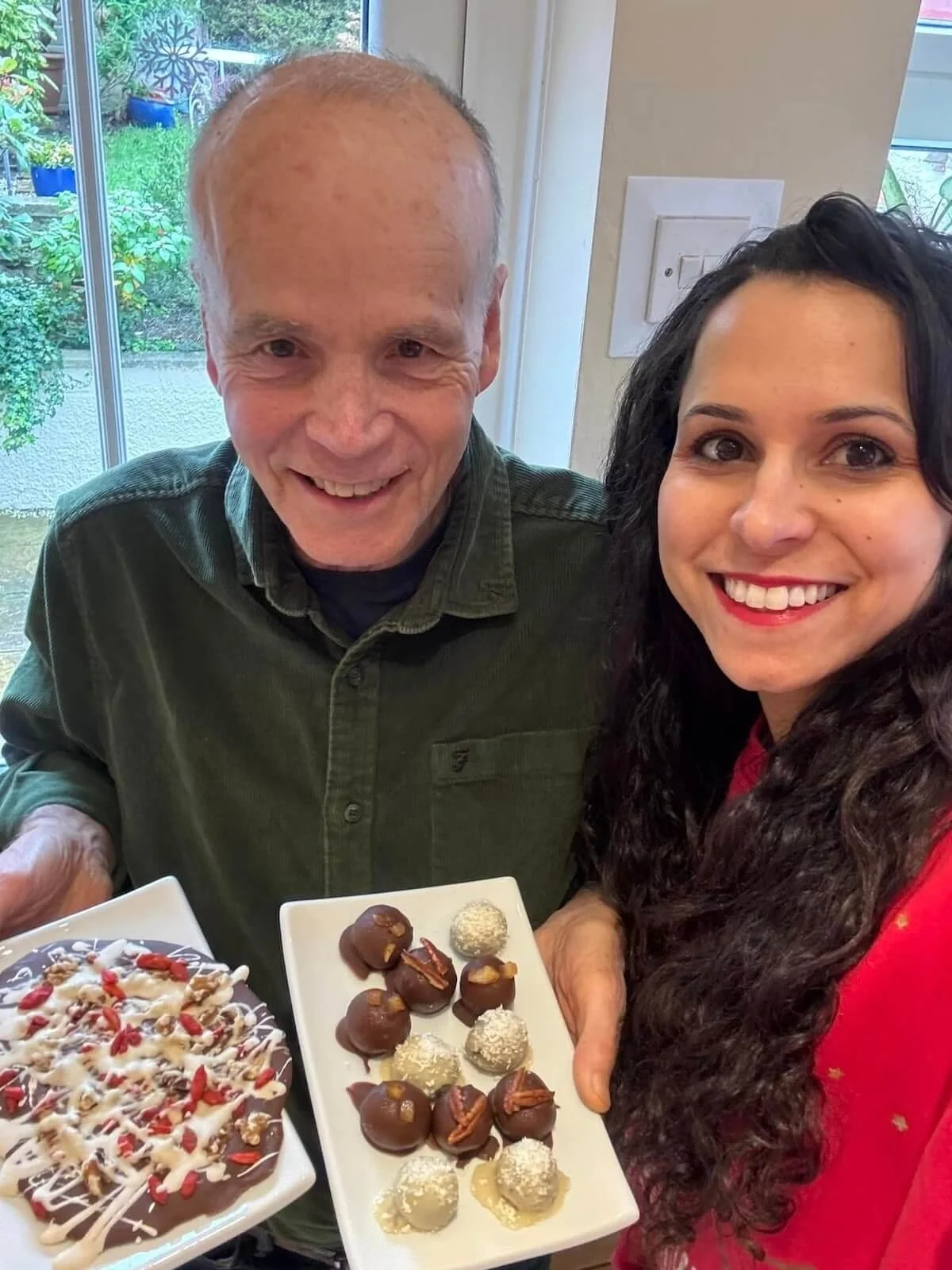
My family and I love cake and chocolates, and we still indulge at Christmas – this is my dad and me with our homemade chocolates.
If this time of year feels noisy or confusing around food, you don’t have to work it out alone. Whether for you personally or for your organisation through talks, workshops and coaching, let’s discuss removing the confusion for good.
Why the January Diet Doesn't Work – Build Healthy Habits Instead
There’s a powerful all‑or‑nothing mindset around health. December can feel like a free‑for‑all, and January becomes a time of restriction with rigid diets that often backfire. These approaches fuel the binge–restrict cycle instead of supporting sustainable change.
You don’t need a January diet or detox to “fix” holiday eating. What you need is consistency, balance, and an approach that fits your life – including celebrations, family dinners, and parties… all year round.
When you build healthy habits before Christmas, you roll into January already feeling energised and confident. Instead of tired, depleted, and chasing unrealistic fads.
The Real Key to New Year Health
Sustainable nutrition doesn’t come from quick fixes or New Year juice cleanses. It comes from daily habits that feel good and are realistic long term. I help busy professionals enjoy the Christmas season, the food, fun, and all those social occasions, without guilt or restriction.
When you start building momentum now, you’re not “making up for” December later. You’re simply continuing what you’ve already begun, and that’s what creates genuine, lasting new year health.
Five Ways to Stay Healthy Over Christmas (and Beyond)
These aren't rules. They're small, practical changes that make healthy eating natural and enjoyable all year round.
1. Add More Fruit and Veg to Every Meal
Only a third of UK adults eat five portions a day. Yet fruit and vegetables are essential for gut health, fullness, and reducing the risk of lifestyle diseases.
The British Dietetic Association notes that fibre supports beneficial gut bacteria and is linked with a reduced risk of conditions such as cardiovascular disease, type 2 diabetes, and bowel cancer.
Fibre comes from plant foods including fruit, vegetables, nuts, seeds, beans, and wholegrains.
2. Try to eat Balanced Meals, Even When You're Busy
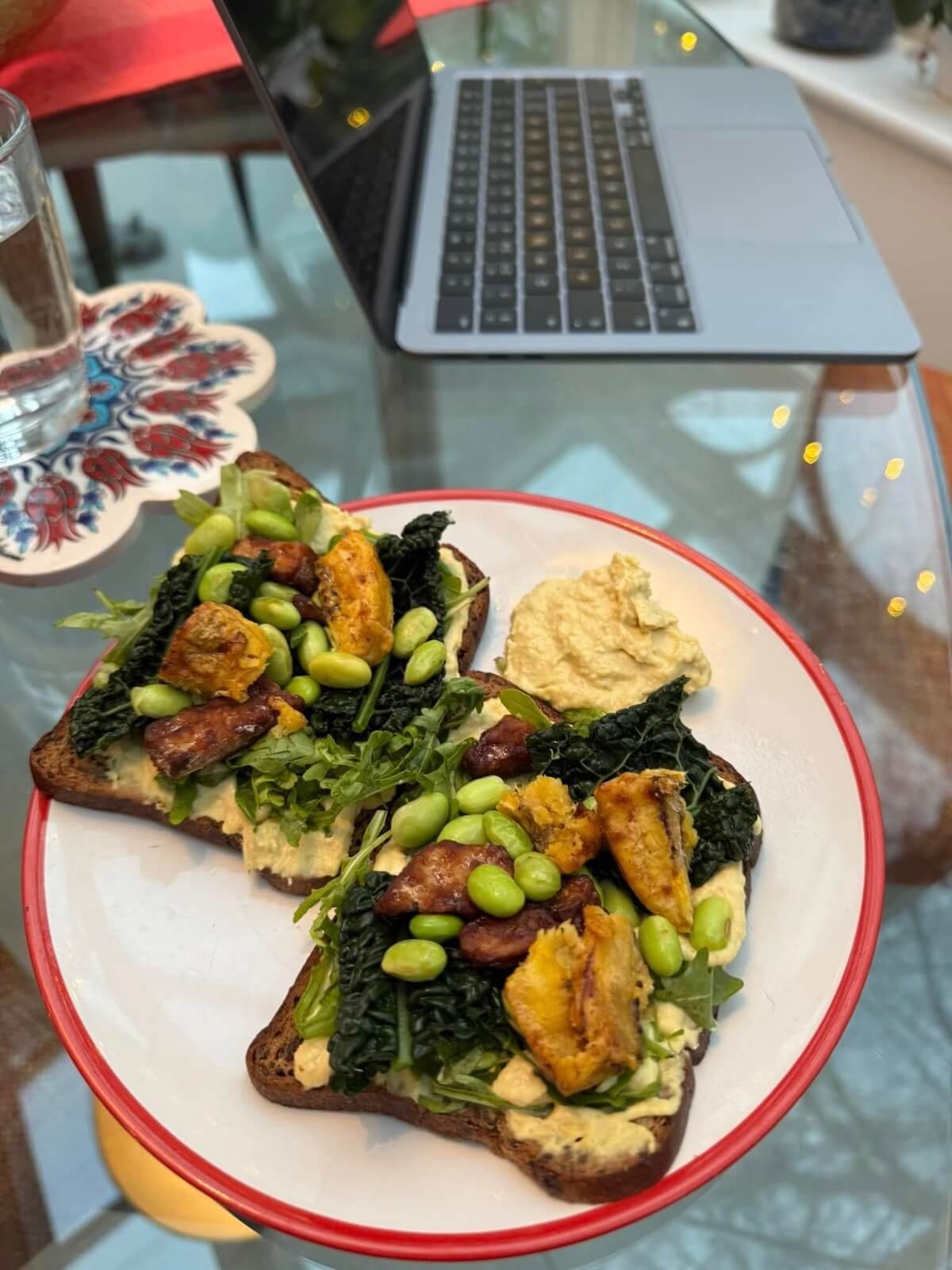
Having balanced, filling options like loaded hummus on toast with vegetables and edamame makes it easier to enjoy treats later without feeling the need to over-indulge. A great strategy all-year round.
Even during party season, try to eat a proper meal before heading out. These meals do not have to be made from scratch, and you can use pre-flavoured packs of lentils or grab a supermarket soup and add other items to it.
A balanced plate includes complex carbohydrates like sweet potatoes, oats, or wholegrains. Lean proteins, particularly plant-based sources like tofu, beans, and lentils. Healthy fats such as avocado, olive oil, nuts, and seeds. Add lots of vegetables or fruit to the plate, which not only helps your overall health but can help you feel more satiated using fewer calories.
If you're on the go, even taking some food in your bag such as a hearty sandwich with hummus, tofu, salad, avocado, and chutney, could help your energy levels and satiety before those canapés and crisps events! Satisfying, festive, and nourishing.
3. Make Healthy Eating Part of Everyday Life
Health shouldn't switch on and off with the calendar. My clients succeed because they integrate healthy eating into their lifestyle without guilt or perfectionism.
It's not about cutting everything out. It's about what you add in. Focus on adding variety from plant foods, which supports improved gut health [PMC10057430], and a range of colours, not cutting out favourites.
They reinforce guilt and fuel binge-restrict cycles. When balanced meals become your norm, cravings for sugary or fatty foods naturally reduce, leaving room to enjoy festive treats (or any treats) without overdoing them. Plus, when we tell ourselves we can't have something, we often want it more - which is why 'cheat days' can trigger binging.
4. Boost Your Fibre Intake
The British Dietetic Association recommends 30g of fibre daily for adults, but less than 1 in 10 adults reaches this. This shortfall affects gut health and disease risk.
While all plant groups have fibre, some foods very high in fibre are beans, lentils, and chickpeas. They are cheap and convenient, and it’s totally fine to just get them in a tin or can.
Festive meals like lentil bolognese or chickpea curry can be batch-cooked and frozen for busy days. These can make up the centrepiece of a meal and you can add other ingredients and other foods around it. If you eat meat, focus more on the beans and just reduce the amount of meat on the plate or try some meat-free meals. We know that shifting from animal-based foods to more plant based foods is beneficially associated with reduced risk of heart disease and all-cause mortality [PMC10652524]. Even simple meals like beans on toast count.
5. Enjoy the Food You Love, Including Your Cultural Favourites
Healthy eating fails when it feels joyless or disconnected from identity. Habits stick when they're enjoyable and culturally relevant.
Every cuisine can be made healthier. For example, with Indian food, make lentils or bean dishes, plus vegetables, the centrepiece. Stir in extra vegetables and reduce the amount of oil used, and use nuts, seeds, or avocado.
Regular nut and seed intake is associated with a 21% lower cardiovascular disease risk [PMC9776667]. Nuts aren't just for Christmas. They're for life! Add them to your breakfast, to a snack or sprinkle on salad.
All my talks and workshops are inclusive, and many organisations with diverse workforces love that we talk about healthy changes that can be adapted to any cultural cuisine.
Skip the Detox, Keep the Joy
Consistency beats punishment every time. Small, evidence-based healthy habits, started now, can transform how you feel through December and beyond.
This is about escaping the binge–restrict cycle, yo-yo health kicks, and New Year detox dangers for good. It may not look as good on social media, but small changes win every time and actually sustainable.
If you want to feel your best in January, don't wait for the "perfect time". Start today, and enjoy a healthy, happy Christmas and New Year.
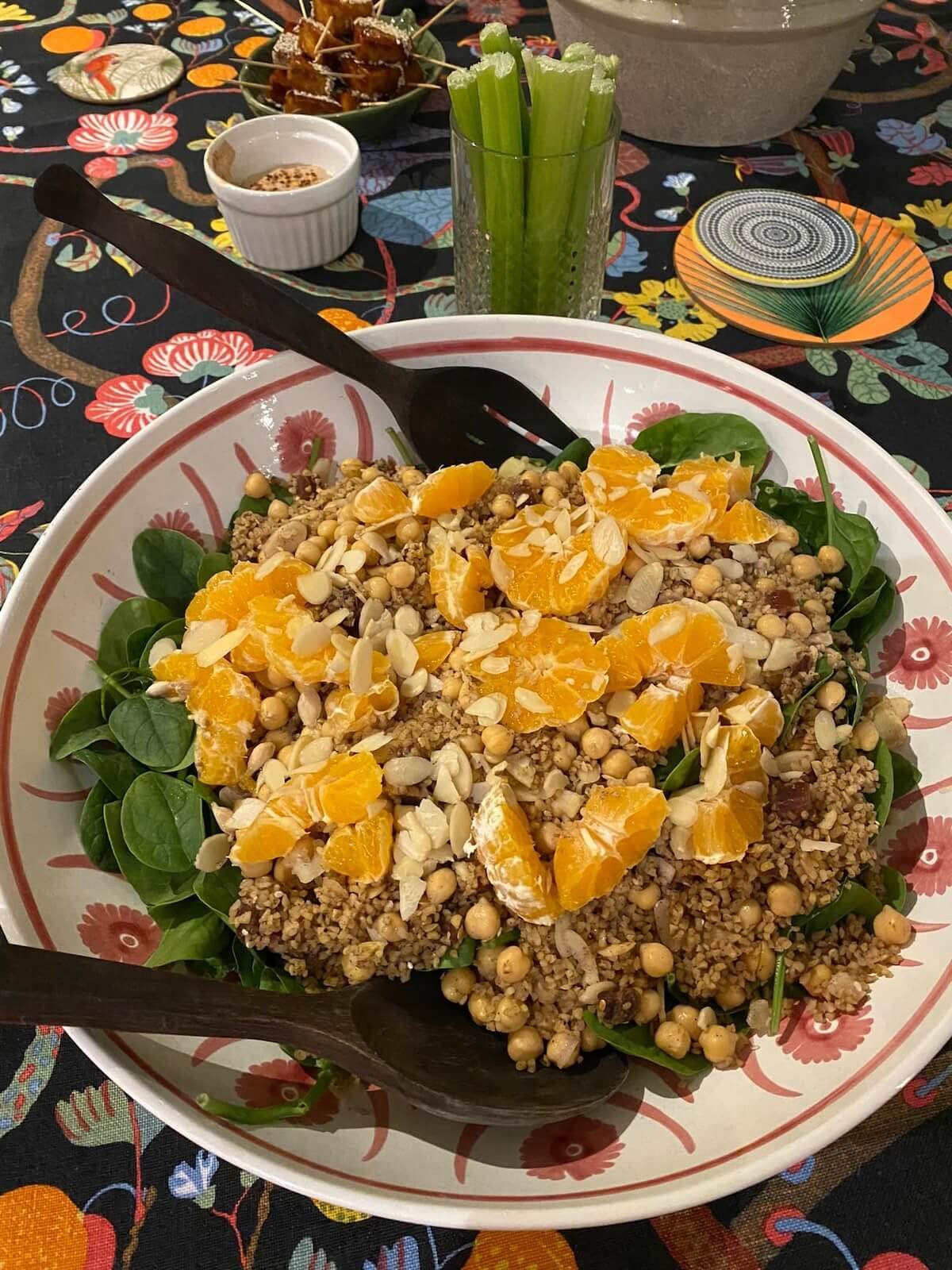
Chickpea, spinach, orange and flaked almond salad. A great example of how to add more fibre and nutrients to your meals, as a side of main dish.
Putting into practice and getting you results
Ready to make 2026 your strongest year yet? My Power Hour, talks, workshops and 1:1 coaching help busy professionals and teams build sustainable nutrition habits that fit around real life, supporting energy, focus, resilience, and weight management without the January detox drama, or any fads!
If you want stay in touch with nutrition tips and exclusive news, subscribe to my newsletter.
Vanessa is a Multi-Award-Winning Speaker and experienced Health and Nutrition Coach. She helps busy people to adopt practical, delicious, and sustainable nutrition habits to support performance, resilience, focus and weight management. Her work bridges personal performance, business performance, and planetary health, helping leaders and teams introduce simple shifts that fit real life and culture, and that can be part of strategies to support performance and profitability, while contributing to wider planetary sustainability. She is a frequent media contributor on platforms including Sky News and BBC Radio. Her clients include Fulham Football Club and Cambridge University.
References
British Dietetic Association. Fibre Food Fact Sheet. Available at: https://www.bda.uk.com/resource/fibre.html
Sidhu SRK et al. Effect of Plant-Based Diets on Gut Microbiota: A Systematic Review of Interventional Studies. Nutrients. 2023;15(6):1510. doi:10.3390/nu15061510. Available at: https://pmc.ncbi.nlm.nih.gov/articles/PMC10057430/
Aune D et al. Consumption of Nuts and Seeds and Health Outcomes Including Cardiovascular Disease, Diabetes and Cancer: A Systematic Review and Dose-Response Meta-Analysis of Prospective Studies. Advances in Nutrition. 2022. PubMed 36041171. https://pubmed.ncbi.nlm.nih.gov/36041171/
Neuenschwander M et al. Substitution of animal-based with plant-based foods on cardiometabolic health and all-cause mortality: a systematic review and meta-analysis of prospective studies. BMC Med. 2023;21:404. doi:10.1186/s12916-023-03093-1. Available at: https://pmc.ncbi.nlm.nih.gov/articles/PMC10652524/
Disclaimer
This blog post shares general nutrition and habit-building information based on evidence-based research. It is not personalised medical advice or a substitute for professional healthcare. Vanessa Sturman is a Nutrition and Health Coach, not a medical doctor. Always consult your GP or a registered healthcare professional before making dietary changes, especially if you have existing health conditions. Individual results vary.